Imagine you’re a 16-year-old pregnant girl, in need of care, yet afraid to ask because the law says you are too young to decide for yourself, thus needing parental consent. According to the 2020 Rwanda Demographic and Health Survey (RDHS), 5% of adolescent girls aged 15–19 in Rwanda have begun childbearing (4% have given birth, 1% were pregnant).
Rwanda’s journey toward ensuring adolescents’ access to sexual and reproductive health (SRH) has been a long and evolving process shaped by legal reform, public dialogue, and tireless advocacy. What began as a top-down legislative initiative in the late 2000s has grown into a nationwide movement championing the rights, health, and dignity of young people.
2008-2016: Laying the Legal Foundation
The first major milestone came in 2008, when the Rwandan Parliament took the unusual step of introducing legislation on human reproductive health without going through the traditional route of cabinet or ministerial initiation. Over the next eight years, extensive consultations followed, culminating in the passage of the Law on Human Reproductive Health in 2016.
This law laid the groundwork for a rights-based approach to reproductive health. Key
provisions included:
- Article 5 that all individuals have equal rights related to reproductive health;
- Article 7 that every adult has the right to make independent decisions about their reproductive health, subject to other laws;
- Article 8, which states that every person has the right to education and access to medical services related to reproductive health.
While progressive in many respects, Article 7 posed a challenge for adolescents, as it limited their ability to independently access SRH services unless they were legally adults.
2018-2020: Advocacy Takes Root
In 2018, civil society organisations (CSOs), including RNGOF, began advocating for adolescent-friendly reforms to SRH policy. Youth-led petitions called on the Prime Minister to amend Article 7 to allow adolescents to access SRH services without parental consent.
By 2020, the issue had reached national prominence. During a press conference, a journalist posed a question to the President about adolescent access to contraceptives. While the President questioned whether contraceptives were the solution, he emphasised the need for national dialogue, stating that the people should determine what works, and that the government would support such decisions.
2023: Research Reveals Significant Gaps Followed by Resistance
In 2023, RNGOF, in collaboration with Health Action International (HAI), and with the financial support of the European Union, conducted a study across three districts, namely Nyagatare, Gatsibo, and Gasabo, to evaluate adolescents’ access to SRH services in terms of affordability, accessibility, and availability. The findings pointed to persistent legal and regulatory gaps that prevented young people from fully realising their rights.
You really know how adolescents engage in sexual activities, yet they are not allowed to access contraceptives, including condoms. Once we try to reach the health facility, they ask for identification to be sure of age. Once they find that we don’t have age for adulthood, they don’t provide condoms, pushing most of us to engage in unprotected sex. This might be the common cause of STIs, HIV and unwanted pregnancy among adolescents.
— Highlighted by a boy participant during a focus group discussion, 2024.
In response, a Member of Parliament proposed amendments to the 2016 law. However, the initiative faced strong pushback from fellow lawmakers, revealing deep seated stigma and resistance to adolescent SRH, especially regarding independent access to services like contraception.
2024: Government Responds and Reform Takes Shape
The debate escalated to the national stage in early 2024 during the National Leaders Retreat, where the Minister of Health was pressed on the issue. In response, he committed to broad public consultations and evidence-based policy reform.
Backed by HAI, RNGOF and other stakeholders partnered with the Ministry of Health to begin reviewing the legal framework. This led to a new Health Services Law that brought together older, overlapping laws into one stronger framework:
The 2016 Law on Human Reproductive Health (including the restrictive Article 7), the 2013 Law on Medical Professional Liability Insurance (which required parental consent for adolescent SRH access), and the Law Regulating Medical Ethics.
By July 2024, the Cabinet of Rwanda, chaired by the President, approved the draft law. In October 2024, the Minister of Health formally presented it to Parliament, where it was passed by a majority vote. In November RNGOF, with its consortium members, submitted a position paper to Parliament, the Ministry of Health, and the Ministry of Justice. The paper welcomed provisions supporting Assisted Reproductive Technologies (ART) and adolescents’ independent access to SRH services.
2025: Public Engagement Begins and a Historic Breakthrough is Achieved
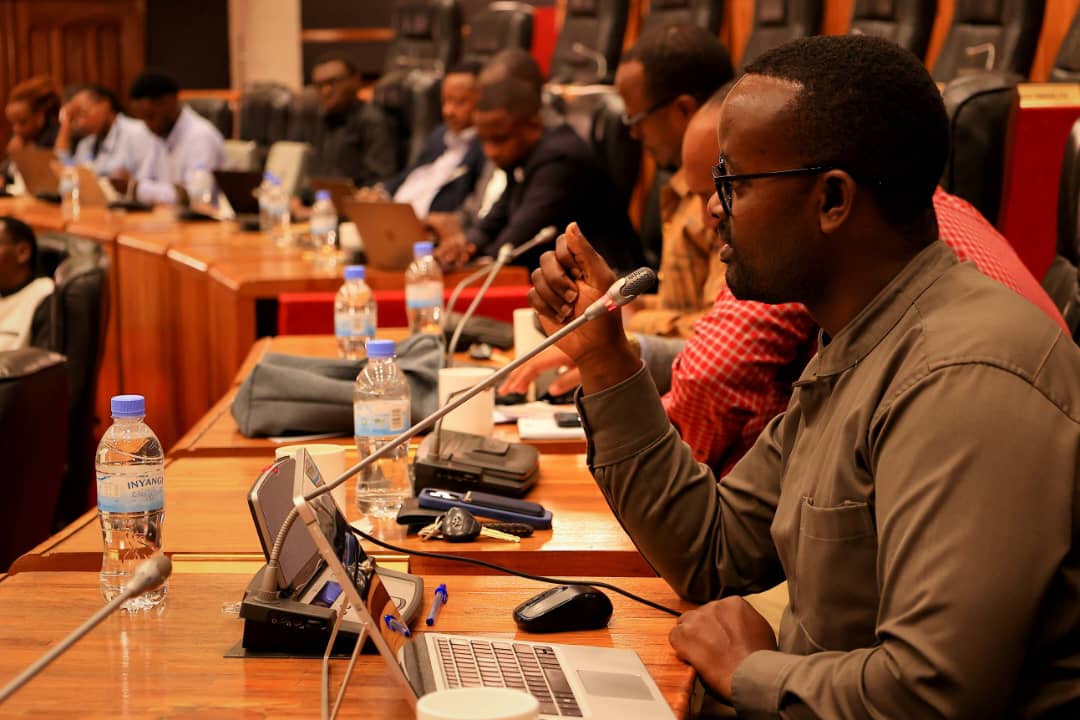
On 17 February 2025, the Parliamentary Committee on Social Affairs, began a detailed, article-by-article review of the draft. It opened the floor to all stakeholder CSOs, medical professionals, youth groups, and the public to submit feedback on adolescent SRH, surrogacy, and other emerging reproductive health issues. RNGOF was represented to urge the parliament to review the law in a way that we had stated in our position paper.
However, this raised concerns over limitations in areas, such as lowering the age of consent to 15 years, surrogacy and implementation safeguards.
On 4th August, 2025, Parliament passed the new Law Regulating Health Care Services, a historic moment for adolescent SRH. Notably, it includes a landmark provision allowing adolescents to access healthcare services, including SRH services, without the need for parental or guardian consent.
A Milestone for Adolescents Sexual Reproductive Health and Rights
The passage of Rwanda’s new Law Regulating Health Care Services, represents a turning point in the nation’s commitment to inclusive, rights-based health care. It is a triumph of evidence-based advocacy, collaborative policymaking, and sustained political will.
For Rwanda’s young people, this legal reform is more than just legislation, it’s a bold affirmation of their right to health, autonomy, and dignity. While challenges remain in implementation and public awareness, this milestone marks a profound step forward in ensuring that no adolescent is left behind in the pursuit of reproductive justice.
Now the law has opened the door. The real test will be whether Rwanda’s health system, schools, families, health workers, religious leaders and the whole of society walk through it with adolescents, ensuring rights are not just written, but lived.