When Communities Hold the Clipboard: How UNAIDS Rwanda is helping put key populations at the centre of Rwanda’s HIV response
Rwanda’s HIV response is a global reference point. By 2022, the country had reached the 95–95–95 targets among adults, now standing at 96-98-98. This means that 96% of all people living with HIV in Rwanda know their status; 98% of those diagnosed as positive are actively enrolled in Antiretroviral Therapy (ART), and 98% of those receiving treatment have successfully achieved viral suppression. But national averages can hide the people the system still misses. Services for key populations, including FSWs, MSM, AGYW, PWUD/PWID and people with disabilities, are uneven. Condoms, Lubricants, PrEP, and PEP are not available equally everywhere, and many health facilities still lack KP registers and providers trained in KP-friendly care.
So who should say where the gaps are? The people who use the services.
With support from UNAIDS Rwanda, RNGOF on HIV/AIDS & HP has turned that principle into practice, fostering a sense of shared purpose among all involved stakeholders. UNAIDS Rwanda has backed this work at every stage, from conceptualization and implementation to data analysis and advocacy.
1.Community-led monitoring/Integrated Community-led Monitoring
The Integrated Community-Led Monitoring (iCLM) model for HIV, TB and Malaria, developed by RNGOF on HIV/AIDS & HP with the Ministry of Helath/Rwanda Biomedical Centre (RBC), collects real-time data from the communities at risk, most affected, and impacted by HIV, TB and Malaria. The iCLM model was validated along with the iCLM system for community data management. iCLM aims to identify barriers such as stigma, discrimination, and service gaps experienced by service users, and to address them.
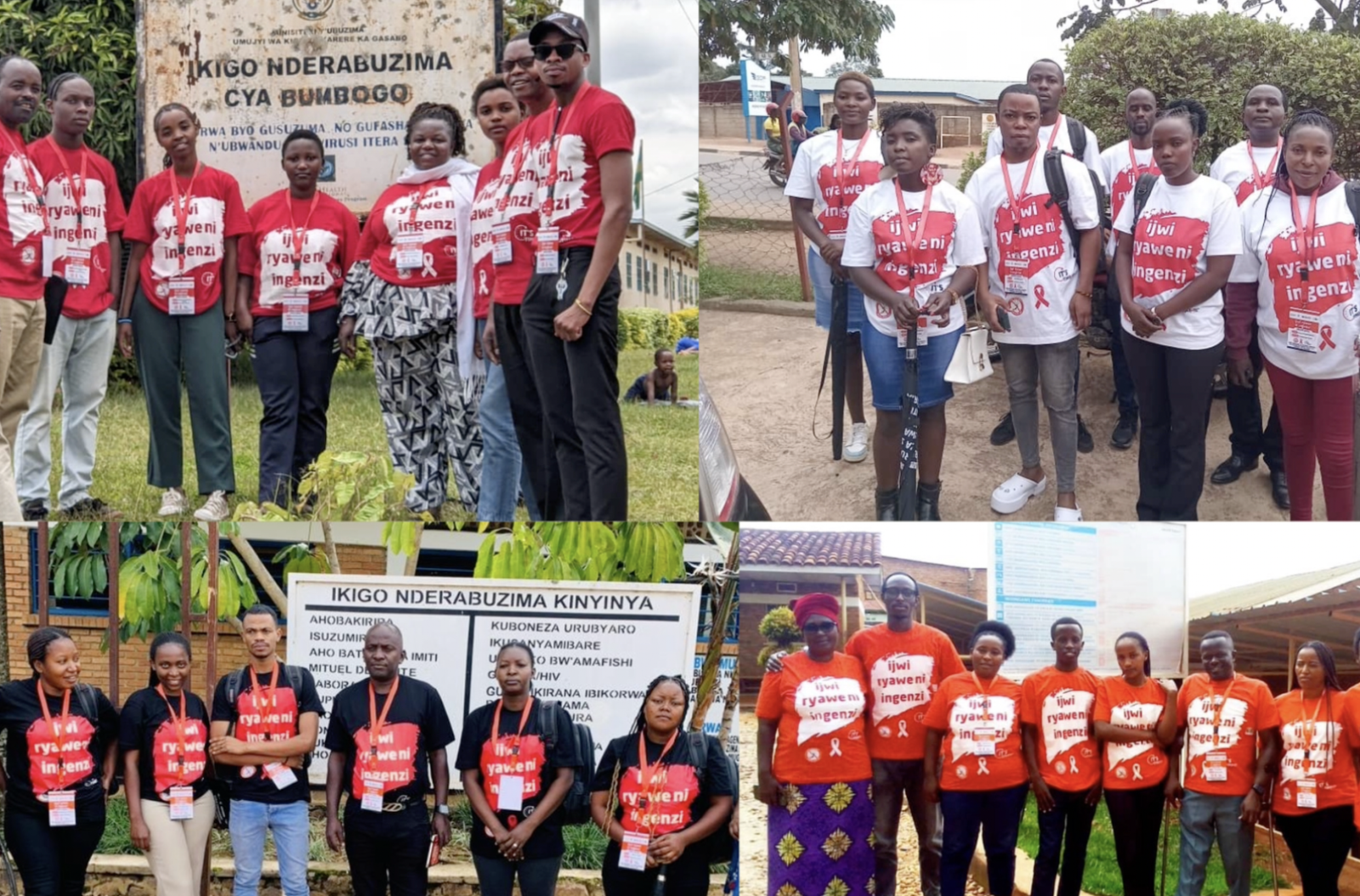
With UNAIDS Rwanda support and using the iCLM system for community data management, RNGOF on HIV/AIDS & HP and five community-rooted partners piloted community-led monitoring in Nyarugenge and Kicukiro districts. The partners were FXB Rwanda, Strive Foundation Rwanda (SFR), Health Development Initiative (HDI), Ihorere Munyarwanda Organization (IMRO Rwanda), and Association Nationale de Soutien aux Personnes vivant avec le VIH/SIDA (ANSP+). The Umbrella of Organizations of Persons with Disabilities in the fight against HIV&AIDS and for Health Promotion (UPHLS) and Rwanda Interfaith Council on Health (RICH) joined to make sure people with disabilities and faith communities were included. RBC issued a formal letter of support and collaboration, opening health-facility doors to community monitors/service users.
The evidence
| 20 | master trainers trained: average scores rose from 54% to 88%. |
|---|---|
| 75 | district stakeholders engaged: in Nyarugenge, CLM knowledge jumped from 17% to 96%. |
| 2 | district CLM task teams formed: health centres, district health units, and representatives of sex workers, MSM, AGYW, people living with HIV and people with disabilities at the same table. |
| 50 | community monitors trained (25 women, 25 men), drawn from the communities being served, and moved from paper forms to smartphone-based data collection on the iCLM system. |
| 1,291 | structured interviews across 10 health facilities: 744 with key populations (including 33 transgender people), 364 with adolescent girls and young women, and 183 with people with disabilities. |
| 20 | facility observation and manager surveys: one of each per site. |
This was not research done about key populations. It was monitoring done by them.
2.From evidence to policy for adolescents and young people
The same partnership is reshaping the policy environment for adolescent girls and young women. Teenage pregnancy, gender-based violence and new HIV infections meet in this group.
With UNAIDS Rwanda, RNGOF on HIV/AIDS & HP led an ethics-approved national assessment (RNEC947/2025) of the policy and legal environment on SRHR and HIV. It covered four high-burden districts, with 384 survey respondents and 79 key informant interviews. Then it moved the findings into action:
- 36 stakeholders validated the findings.
- 50 copies of policy briefs went to ministries, parliamentary committees, UN agencies and youth-led networks.
- 45 senior representatives from the Health, Education, Gender and Youth sectors attended a high-level dialogue. Together they agreed on:
- awareness of the new Law No. 026/2025 on adolescents’ access to SRH services
- harmonizing comprehensive sexuality education with youth-friendly health service standards
- a commitment from RBC to scale up quality, confidential youth corners across districts
- 4 CSOs and 4 young people fed lived experience directly into the Ministry of Health’s alignment of guidelines with the new health services law.
- A primary-school CSE toolkit was co-created with the Rwanda Basic Education Board and UNFPA, and was validated by the Rwanda Basic Education Board (REB).
3.Why this is built to last
Sustainability is designed into this work, not added at the end:
- Government partners co-created the products instead of only validating them.
- District task teams connect communities directly to the facilities that serve them.
- Training materials exist in both English and Kinyarwanda.
“Key populations know exactly where the health system works well and where it fails them. UNAIDS Rwanda’s support has let us turn that knowledge into data, and that data into decisions.”-Louis Ngabonzima, Director of Programs, RNGOF on HIV/AIDS & HP
The next chapter of Rwanda’s HIV response has to be community-led, owned, and equity-driven. Communities should be counted and heard. This partnership shows what that looks like in practice.
Thank you, UNAIDS Rwanda, for standing with communities.
#LetCommunityLead #EndAIDS2030 #KeyPopulations #HealthyAdolescentRw #HealthEquity